Dynamic creative optimization has evolved from an enterprise luxury to an essential performance lever as rising CPCs and ad fatigue demand more creative variations than manual production can sustain. This guide breaks down how to build a scalable DCO system using product feed data across Google, Meta, and programmatic channels.
What is Dynamic Creative Optimization (DCO)and how it works
Dynamic creative optimization (DCO) is an automated advertising technology that assembles ad components in real-time based on user data, context, and performance signals. Instead of creating hundreds of static ad variations manually, DCO systems pull from a library of creative elements—images, headlines, prices, calls-to-action—and combine them dynamically to serve the most relevant ad to each user.
The core mechanism behind DCO advertising relies on three components: a data source (typically your product feed), a set of creative templates, and an optimization layer that learns which combinations perform best. When a user triggers an ad impression, the system selects the optimal creative combination based on available signals like browsing history, device type, location, or even weather conditions.
For ecommerce advertisers, this means your dynamic ads can automatically display the exact product a user viewed, with current pricing, stock status, and contextually relevant messaging—all without manual intervention for each variation.
DCO vs standard A/B testing
Traditional A/B testing involves creating discrete ad variations, running them against each other, and selecting winners based on statistical significance. This approach works but has fundamental limitations: it requires manual creation of each variant, takes time to reach significance, and tests combinations sequentially rather than simultaneously.
Dynamic creative optimization operates differently. Rather than testing complete ads against each other, DCO tests individual elements across all possible combinations simultaneously. A system might test 5 headlines, 4 images, and 3 CTAs—creating 60 potential combinations—and automatically shift impressions toward winning combinations in real-time.
The key differences include:
- Scale: A/B testing handles tens of variations; DCO handles thousands
- Speed: A/B tests require weeks for significance; DCO optimizes continuously
- Efficiency: A/B testing requires manual setup per variant; DCO generates variants programmatically
- Personalization: A/B tests serve the same winner to all users; DCO can serve different combinations to different audiences
Using product feed data as your creative foundation
Your product feed is the foundation of any scalable DCO system. Every attribute in your feed management setup—product titles, descriptions, images, prices, categories, custom labels—becomes a potential creative element that can be dynamically inserted into ad templates.
Feed-based creative offers several advantages over static creative production:
- Automatic updates: Price changes, stock status, and promotions sync automatically
- Product-level personalization: Ads show exactly what users browsed or purchased
- Scalability: One template can generate ads for thousands of products
- Consistency: Brand elements remain uniform while product data varies
The quality of your DCO output depends directly on feed data quality. Missing images, truncated titles, or inconsistent descriptions will surface in your ads. Before implementing dynamic creative, audit your feed for completeness and standardization.
Tip: Enrich your product feed with custom attributes specifically for creative—such as short promotional headlines, lifestyle image URLs, or benefit-focused descriptions. These creative-specific fields give your DCO templates more compelling elements to work with beyond standard catalog data.
Essential feed attributes for DCO
Beyond the standard required fields, consider adding these attributes to power more sophisticated dynamic creative:
- Sale badge flags (new arrival, bestseller, limited stock)
- Promotional text lines for different campaign types
- Multiple image angles or lifestyle images
- Category-specific benefit statements
- Margin or priority labels for bid and budget allocation
DCO across channels: Google, Meta, and programmatic
Dynamic Creative Optimization in Google Ads
Google offers DCO capabilities across several campaign types. Performance Max campaigns automatically combine your text, image, and video assets to find optimal combinations across Search, Display, YouTube, and Shopping placements. For best results with PMax creatives, provide diverse asset variations and let machine learning optimize distribution.
Responsive Search Ads apply DCO principles to search advertising, testing combinations of up to 15 headlines and 4 descriptions. Shopping ads pull directly from your Merchant Center feed, making feed optimization critical for dynamic ad performance.
For Display campaigns, responsive display ads generate thousands of combinations from your uploaded assets, while dynamic remarketing ads pull product data directly from your feed to show users items they previously viewed.
Dynamic Ads on Facebook and Meta
Meta's dynamic ads system (Advantage+ catalog ads, formerly DPA) pulls product information directly from your catalog to serve personalized ads based on user behavior. The platform handles creative assembly, audience targeting, and placement optimization simultaneously.
For effective Meta ads automation, focus on catalog quality and creative template design. Meta allows you to create frames, overlays, and templates that wrap around your product images—adding promotional messaging, pricing, or brand elements dynamically.
Key considerations for Meta DCO:
- Catalog must pass Facebook's review requirements
- Product images should work within template overlays
- Creative variations can be tested at the ad set level
- Advantage+ creative enables automatic element testing
Tip: By using Dotidot's Image Editor, you can create templates containing your brand visuals mixed together with any feed information you want.
Programmatic DCO
Programmatic platforms like Google DV360, The Trade Desk, and specialized DCO platforms offer the most sophisticated dynamic creative capabilities. These systems can incorporate third-party data signals, weather triggers, inventory levels, and complex audience segments to personalize creative at impression level.
Programmatic DCO typically requires more technical setup—including creative management platforms, data connections, and template development—but offers the highest degree of creative personalization and cross-channel consistency.
Building a scalable creative cystem with Dotidot Automation
The challenge most advertisers face with DCO is not the ad platforms themselves—it's producing enough quality creative inputs to feed the system. Manual creative production creates a bottleneck that limits how many product-level variations, seasonal updates, or promotional messages you can test.
A scalable DCO system requires three components working together: optimized product feed data, automated creative generation, and structured campaign architecture. PPC automation tools bridge the gap between your product data and platform requirements, eliminating manual work while maintaining creative quality.
The workflow looks like this:
- Product data flows from your ecommerce platform into a central feed management system
- Feed rules enrich, transform, and optimize data for each advertising channel
- Creative templates pull feed attributes to generate ad variants automatically
- Segmentation logic groups products for different campaigns or creative treatments
- Performance data feeds back to inform optimization decisions
Automation rules for creative variation
With automation rules, you can create conditional creative variations without manual work. Examples include:
- Products with margins above 30% receive premium creative treatments
- Items on sale automatically receive promotional overlays
- Low-stock products trigger urgency messaging
- Seasonal categories receive themed creative during relevant periods
Generating dynamic ad variants with Dotidot's Image Editor
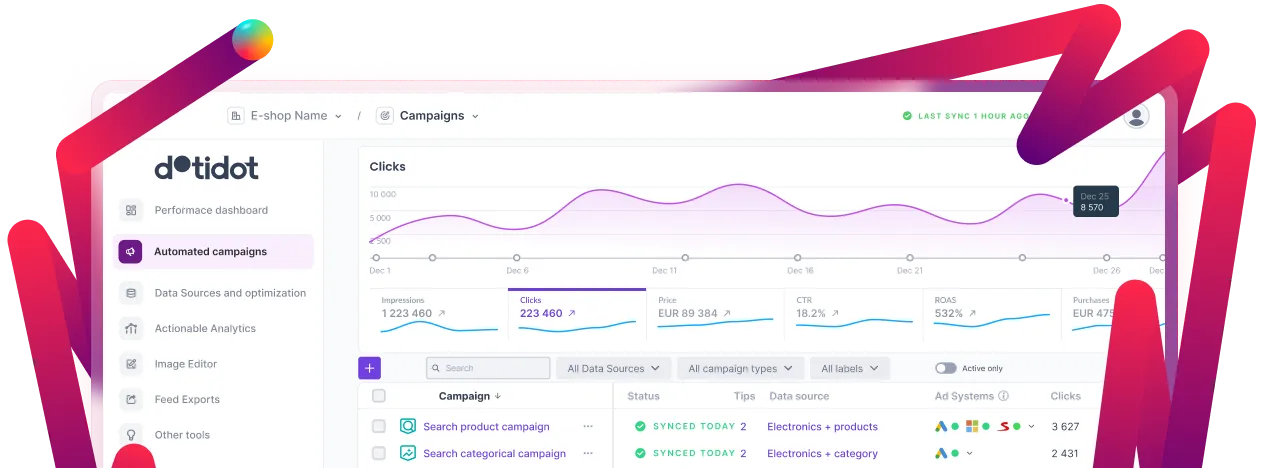
The Image editor enables batch creative generation by applying design templates to product images at scale. Instead of designing individual ads for each product, you create template layers that dynamically incorporate product data—pricing, promotional text, badges, brand elements—and apply them across your entire catalog.
This approach solves the creative production bottleneck that limits most DCO implementations. A single template can generate thousands of ad variants, each personalized with accurate product information and consistent