Analysis: 5 things that go wrong when you don’t optimize at the product level



We analyzed dozens of Google and Meta accounts from e-commerce companies of all sizes.
And we discovered five recurring problems hidden inside campaign data, all connected to the lack of product-level optimization.
These findings reveal where marketers lose efficiency, waste budget, and limit growth potential.
1/ Budget is concentrated in too few products
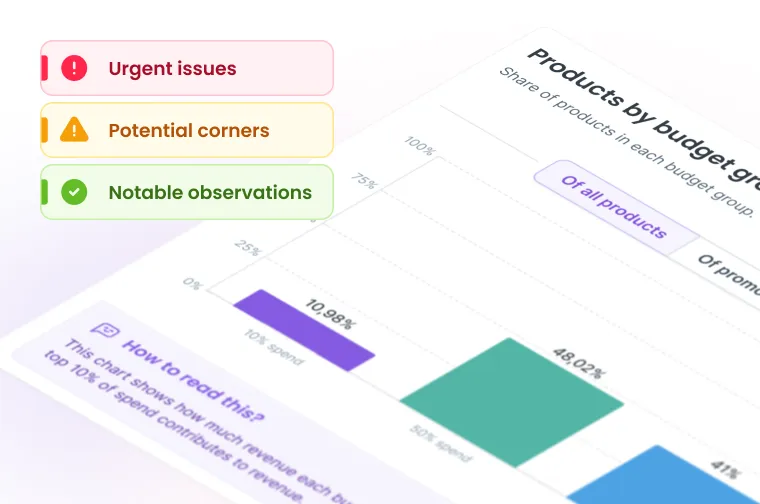
In every account we reviewed, most of the ad budget went to only a small portion of the catalog.
- In one case, 50% of all spend went to just 1.4% of products
- In another, 80% of the budget was invested in roughly 8% of promoted items
That means algorithms are betting heavily on a few proven performers. When one of those products goes out of stock or loses seasonal demand, results can drop instantly.
2/ Most products never get properly tested
This issue is connected to the first one. Even when thousands of products are in the feed, only a fraction get visibility.
- In one account, only 10% of promoted products generated more than 10 clicks, consuming 70% of the total budget.
- In all others, 70% - 80% of products received little to no clicks.
This shows that algorithms focus on a small, familiar set of items while the rest of the catalog never gets a chance to perform.
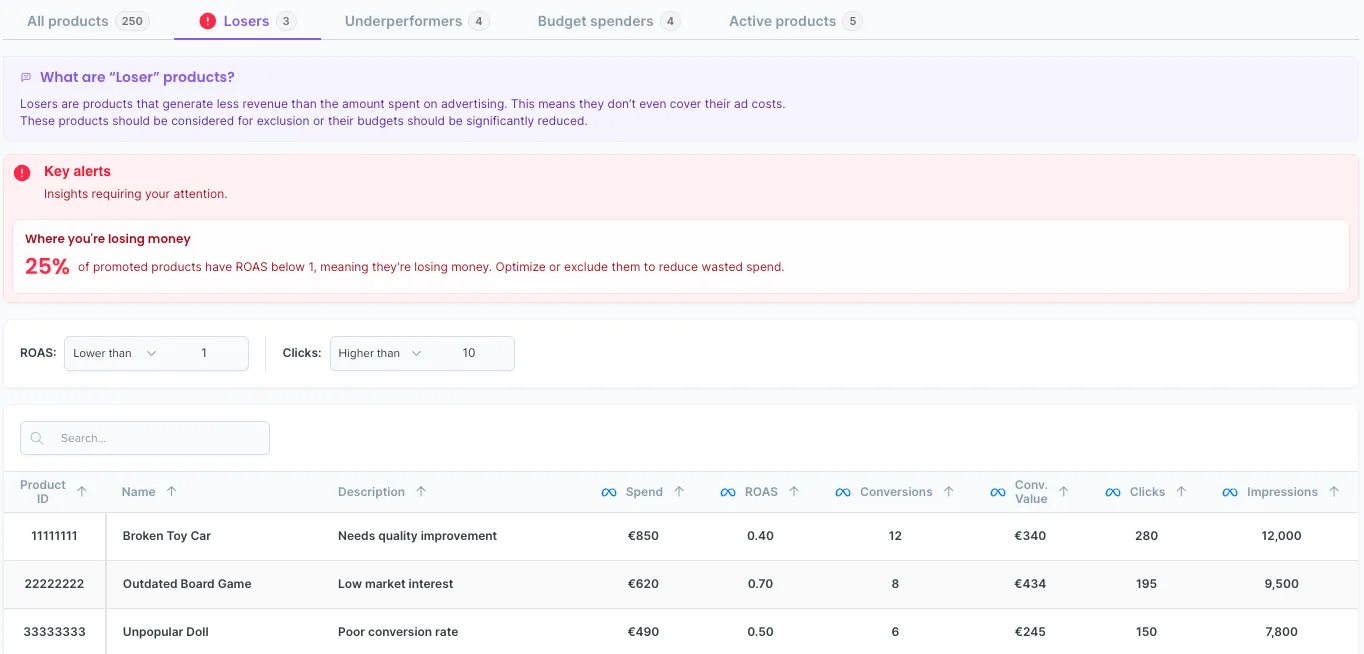
3/ Lots of products actually lose money
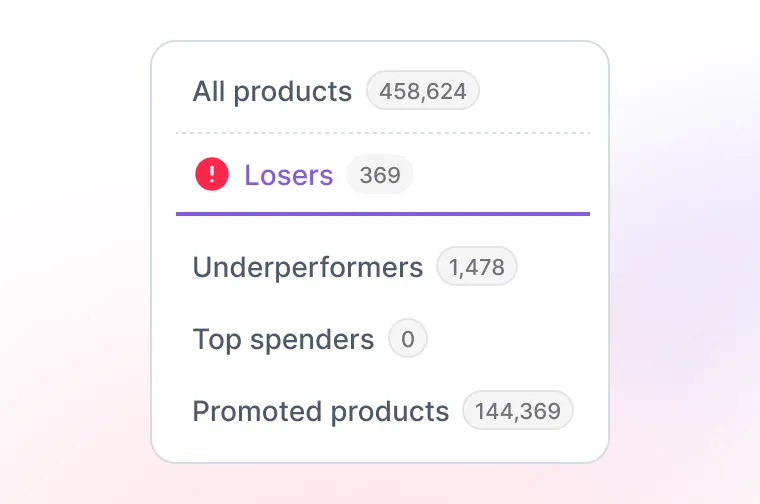
Products with ROAS below 1 are essentially losing money, they simply cost more to promote than they earn back. And that’s when we don’t take margins into consideration.
- In several accounts, between 5% and 10% of promoted products fell below ROAS 1, collectively spending thousands of EUR in wasted budget.
- When switching to budget optics, 30% of the budget went to products with a ROAS below 1.
Without product-level tracking, this budget burn often goes unnoticed.
4/ Budget goes to underperformers
Even when products are not total “losers,” many still fall short of what could be considered healthy returns.
- In multiple analyses, 15–25% of spend went to products with ROAS far below the account average or defined goal (for example, below ROAS 5 or 20).
- These underperformers together consumed up to 22% of the total budget.
These are not failed products. These are just overlooked opportunities for optimization.
5/ The potential you don’t use
The same pattern repeats: a small portion of products drives most of the results, while a large part of the catalog remains underused.
- Across accounts, around 10–15% of promoted products generated more than 80% of total revenue.
- That leaves up to 85–90% of the portfolio contributing very little.
Imagine what could happen if even part of that hidden catalog started performing better.
What this all means
These findings show that without product-level optimization, most campaigns:
- Over-invest in a few products
- Spend budget on low-ROAS or even money-burning items
- Leave a huge part of the catalog untested, never discovering what their catalog could achieve
The good news? These problems are fixable.
How to fix it: Product-level reporting
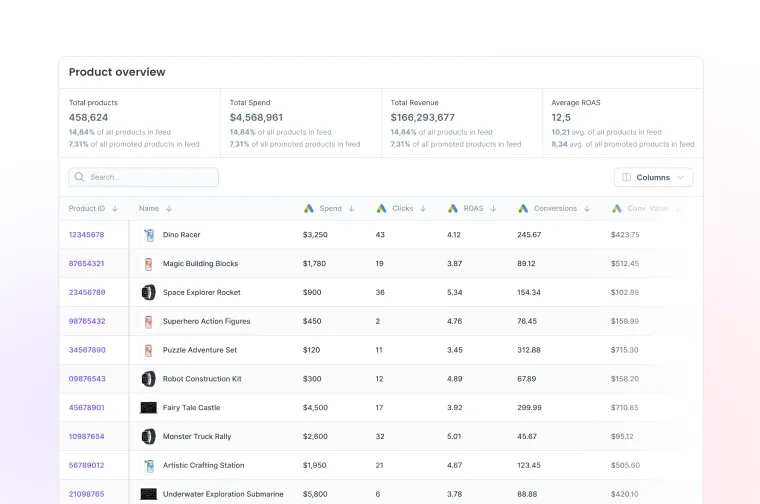
The fix is simple. You need to start doing product-level reporting. Which means downloading product data from your ad system and building reports around it. Or you can…
Introducing Product Analytics
That is exactly why we built Product Analytics, a tool that turns your product and campaign data into clear insights.

It shows you:
- Where your budget really goes
- Which products waste money
- Which items deserve more visibility
- How to balance your portfolio for better results
Product Analytics gives you the data you need to act, not just analyze. If you want to see where your own campaigns hide these inefficiencies, try Product Analytics for free and uncover insights that help you optimize smarter.