How to improve ecommerce conversion: Fix hidden gaps
With traffic costs climbing and competition intensifying, many eCommerce stores are watching visitor numbers grow while revenue flatlines. The problem often lies in hidden product-level inefficiencies that silently kill conversions. This guide breaks down the most common reasons stores struggle to improve ecommerce conversion—and shows you exactly where to look and what to fix first.
Dotidot Editors
March 20, 2026
Show table of contents
The traffic vs conversion gap
Many eCommerce stores fall into the same trap: investing heavily in traffic acquisition while ignoring conversion fundamentals. You might celebrate growing visitor numbers, but if your revenue stays flat, you have a conversion problem—not a traffic problem.
The gap between traffic and conversion often widens as stores scale. More visitors mean more diverse intent, more device types, and more opportunities for friction. Without systematic analysis, these inefficiencies compound and silently drain your marketing budget.
To improve ecommerce conversion, you need to shift focus from vanity metrics to actionable product-level data. The stores winning today are those treating conversion optimization as an ongoing discipline, not a one-time project.
What is a healthy conversion rate
Ecommerce conversion rates vary significantly by industry, product type, and traffic source. However, general benchmarks provide useful reference points:
Average ecommerce conversion rate: 2-3%
Top-performing stores: 5-10%
Mobile typically converts 50% lower than desktop
Paid search traffic often converts higher than social traffic
These numbers mean little without context. A store selling high-consideration products at premium prices will naturally convert differently than a fast-fashion retailer. What matters is understanding your baseline and identifying where you underperform relative to your own potential.
UX and checkout friction
User experience issues remain the most common conversion killers. Even small friction points accumulate into significant abandonment rates.
Navigation and search problems
If visitors cannot find products quickly, they leave. Poor site search, confusing category structures, and slow filtering all create unnecessary barriers. Analyze your internal search queries to discover what shoppers look for but cannot find easily.
Checkout abandonment
Cart abandonment rates average 70% across ecommerce. The most common causes include:
Unexpected shipping costs revealed late in checkout
Tip: Enable guest checkout and show total costs (including shipping) as early as possible. Stores that display shipping estimates on product pages see measurably higher add-to-cart rates.
Traffic quality and intent issues
Not all traffic converts equally. If you are attracting the wrong visitors, no amount of UX optimization will help. Increasing conversion rate ecommerce starts with understanding who arrives at your store and why.
Common traffic quality problems include broad targeting in paid campaigns, ranking for irrelevant keywords, and misaligned ad creative that sets wrong expectations. When ad messaging promises something your landing page does not deliver, bounce rates spike.
Common traffic quality problems include broad targeting in paid campaigns, ranking for irrelevant keywords, and misaligned ad creative that sets wrong expectations.
Review your Keyword match types to ensure you attract high-intent searchers rather than casual browsers. Segment your analytics by traffic source to identify which channels bring converters versus window shoppers.
Product-level conversion gaps
Aggregate conversion rates hide critical insights. Two products can generate identical traffic but wildly different conversion rates. Product-level analysis reveals which SKUs underperform and why.
Identifying underperformers
Some products receive clicks but never convert. These "zombie products" consume ad budget without generating returns. Others convert well but receive minimal visibility. Effective product feed management helps you surface winners and suppress losers.
Content quality variations
Product pages with thin descriptions, low-quality images, or missing specifications convert poorly. Audit your catalog for:
Products with fewer than 100 words of description
Missing size guides or specification tables
Only one or two product images
No customer reviews
Pricing and competitive factors
Price transparency has transformed ecommerce. Shoppers compare prices instantly across retailers. If your pricing appears uncompetitive, visitors research elsewhere before returning—or they never return at all.
Beyond base pricing, consider total cost perception. Free shipping thresholds, bundle discounts, and loyalty rewards all influence conversion decisions. Monitor competitor pricing regularly and adjust your promotional strategy accordingly.
Price anchoring also matters. Showing original prices alongside discounted prices increases perceived value. However, fake discounts erode trust long-term, so use this technique honestly.
Identifying drop-off points with data
Data-driven conversion optimization requires identifying exactly where visitors abandon their journey. Set up funnel tracking to measure drop-off at each stage:
Homepage to category page
Category page to product page
Product page to add-to-cart
Cart to checkout initiation
Checkout steps to purchase completion
Each transition reveals optimization opportunities. A significant drop between product page and cart suggests pricing concerns, unclear value propositions, or missing trust signals. A drop during checkout indicates friction in the purchase process itself.
Tip: Use session recordings to watch real visitor behavior at your highest drop-off points. Quantitative data tells you where problems exist; qualitative observation shows you why.
How to fix it: Product-level reporting
The fix is simple. You need to start doing product-level reporting. Which means downloading product data from your ad system and building reports around it. Or you can…
Introducing Product Analytics
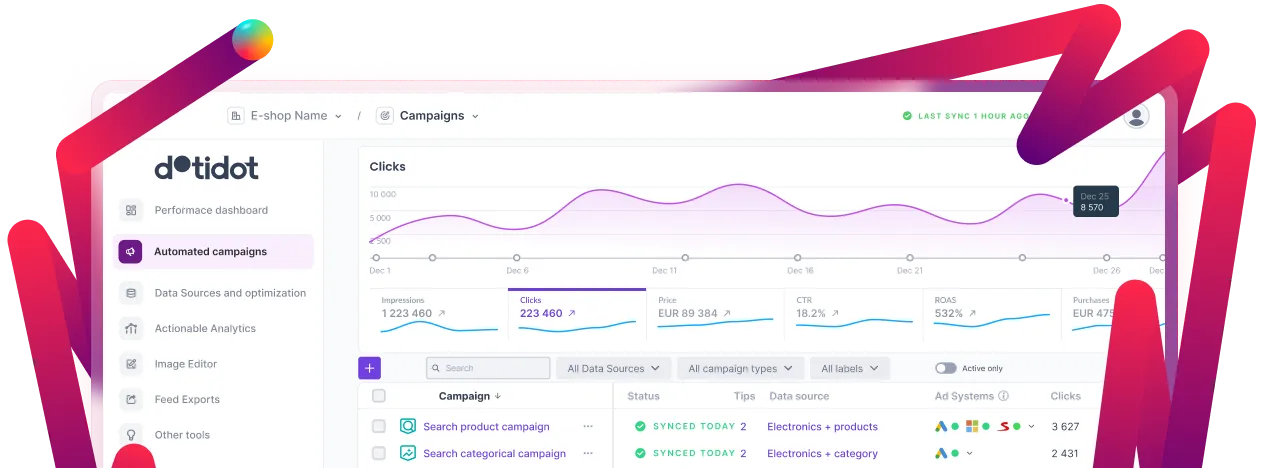
That is exactly why we built Product Analytics, a tool that turns your product and campaign data into clear insights.
Product Analytics will completely change the game in your favor
It shows you:
Where your budget really goes
Which products waste money
Which items deserve more visibility
How to balance your portfolio for better results
Product Analytics gives you the data you need to act, not just analyze. If you want to see where your own campaigns hide these inefficiencies, try Product Analytics for free and uncover insights that help you optimize smarter.
Start with these proven tactics to increase ecommerce conversion:
Use Product Analytics to analyze your portfolio
Add urgency signals like stock levels and limited-time offers
Display trust badges prominently near checkout buttons
Implement exit-intent popups with targeted offers
Speed up page load times—every second of delay costs conversions
Add social proof through reviews, ratings, and user-generated content
Simplify mobile navigation and enlarge touch targets
For paid channels, align landing pages with ad messaging. If your ad promotes a specific product, link directly to that product page—not your homepage. Leverage PPC automation tools to dynamically match ads with relevant landing experiences.
Conclusion
Improving ecommerce conversion requires systematic analysis, not guesswork. By examining your store at the product level, identifying friction points with data, and prioritizing fixes based on impact, you can unlock significant revenue growth from existing traffic. The stores that thrive in competitive markets treat conversion optimization as continuous practice—constantly testing, measuring, and refining their customer journey.
Free webinar
Peak season is coming. Don’t screw it up
Get ready for the biggest shopping days of the year. October 20, 10:00 AM (UTC+2).